One More Farm
FROM OUR FARM TO YOUR HOME.
Food & Recipes · Fermentation
Homemade Organic Apple Cider Vinegar — Using Apple Scraps
Simple things you can make yourself.
- Difficulty
- Beginner
- Fermentation
- About 1–2 weeks with the scraps, then several weeks or longer to develop.
Want to make this later? Bookmark this page so you can easily find the recipe when you're ready!
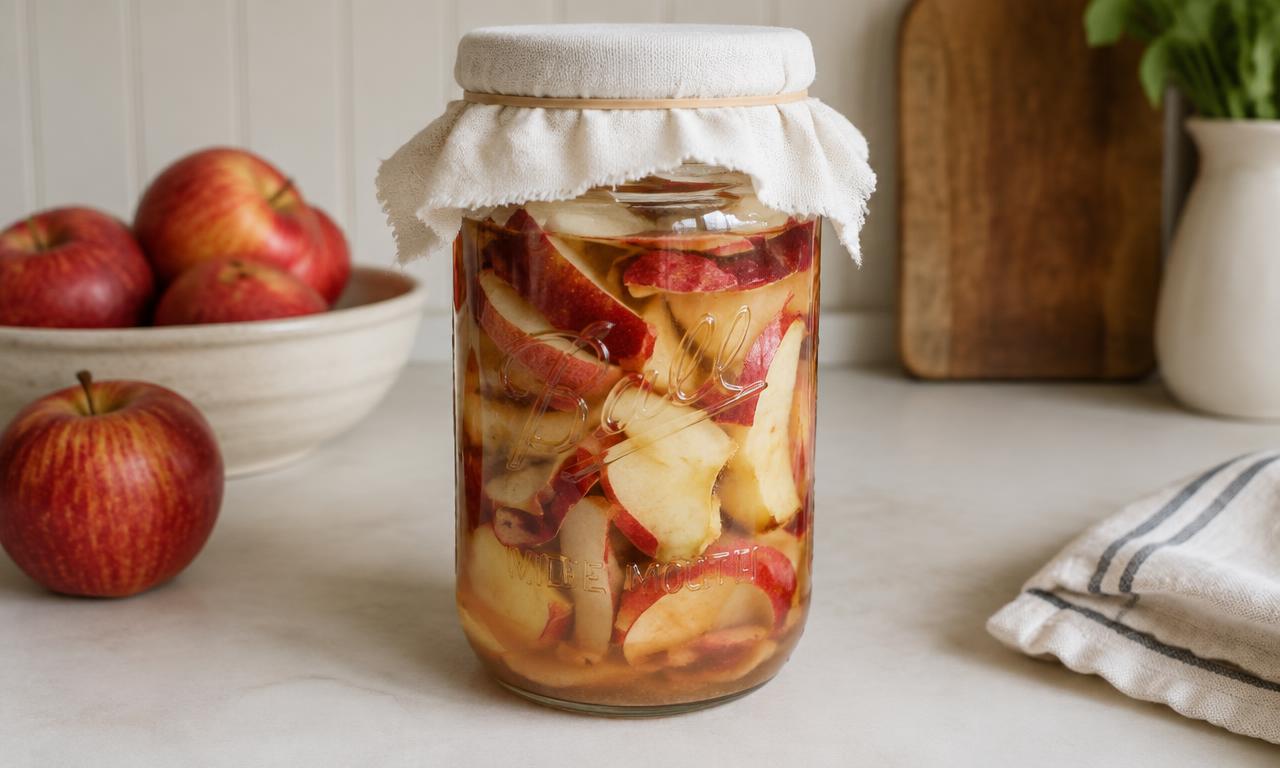
Making apple pie or applesauce? Don't toss those peels and cores — they can become homemade apple cider vinegar.
To make an organic version, simply start with organically grown apples.
Welcome to WHY BUY IT? MAKE IT!, our One More Farm series about learning to make more at home, reducing waste, and becoming a little more self-sufficient.
Ingredients
- Apple peels and cores from fresh, healthy apples
- 2 cups filtered or non-chlorinated water
- 2 tablespoons plain cane sugar
- 1 tablespoon raw, unfiltered apple cider vinegar with the mother (optional starter)
Tools You'll Need
- Clean, wide-mouth quart Mason jar
- Glass fermentation weightShop tool
Keeps the apple pieces submerged below the liquid during the first fermentation.
- Breathable cloth cover and rubber bandShop tool
Lets the jar breathe while keeping dust and fruit flies out.
- Clean spoon
- Fine-mesh strainer
- Second clean glass container
As an Amazon Associate I earn from qualifying purchases. Some links on this page are affiliate links, which means One More Farm may earn a small commission from qualifying purchases at no additional cost to you. Thank you for supporting our small farm!
Step-by-Step Instructions
Step 1: Save the apple scraps
Wash the apples before cutting. Use healthy peels and cores and discard any moldy or rotten pieces.
Step 2: Fill the jar
Loosely fill a clean jar about halfway with apple scraps.
Step 3: Prepare the sugar water
Dissolve the sugar in the water. Pour it over the apple scraps and add the optional vinegar starter.
Step 4: Keep the scraps submerged
Use a clean fermentation weight to keep the apple pieces below the liquid.
Step 5: Cover and ferment
Secure a breathable cloth over the jar with a rubber band. Keep it at room temperature, away from direct sunlight.
Stir daily during the initial fermentation with a clean utensil.
Step 6: Strain the scraps
After approximately 1–2 weeks, strain out the apple pieces and transfer the liquid to a clean glass container.
Step 7: Allow the vinegar to develop
Cover with a breathable cloth again and allow it to ferment for several more weeks or longer. Fermentation time varies.
A gelatinous layer called the mother may develop.
Important Tips for Success
- Keep your equipment clean.
- Use fresh, healthy apple scraps.
- Keep the apple pieces submerged during the initial fermentation.
- If fuzzy or colored mold appears, discard the entire batch.
- The presence of a mother does not mean the vinegar is safe or sufficiently acidic.
- Do not taste a batch showing mold or other signs of spoilage.
Food Safety & Storage
- Never use homemade apple cider vinegar for home canning or shelf-stable pickling. Its acidity is not standardized or verified.
- For tested canning and pickling recipes, use commercially produced vinegar labeled 5% acidity.
- Homemade vinegar has no guaranteed acidity, shelf life, or food-safety status.
Why Buy It? Make It!
Apple scraps that would have gone in the trash become something useful. Save this recipe for your next apple project — and let us know how your fermentation turns out!
From Our Farm To Your Home.
Shop More of What I Use
Wide-Mouth Mason Jar
A clean wide-mouth quart jar makes it easy to add scraps and fit a fermentation weight.
Shop at Walmart